

Things in Order
fear in a pretty dress

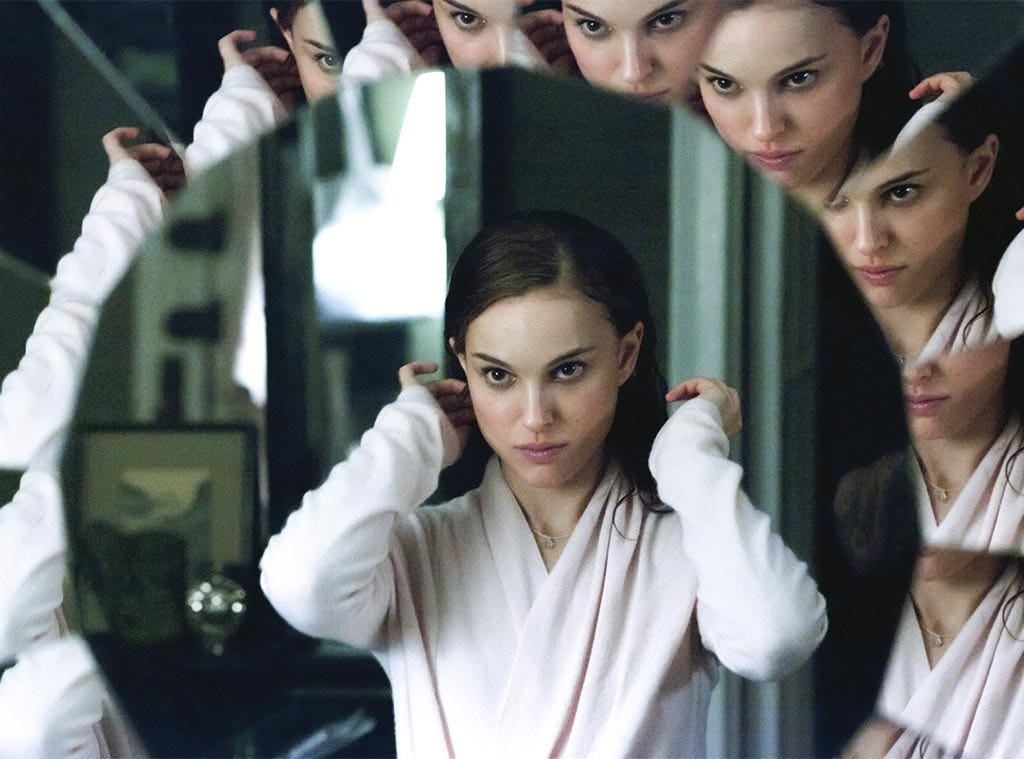
There are people who live easily in the world. I have never been one of them.
I think often about the ones who move through the day with an unstudied grace — those who seem to arrive places already belonging to them. They drop their books on the seminar table, laugh too loudly, forget their umbrellas. They exist, somehow, without fear of unraveling. I admire them.
My own life has been, lately, an exercise in control. I make my bed each morning with the same precision I once reserved for arguments or prayers. I fold sweaters into neat squares, stack notebooks by color, write lists that fill entire pages: readings due, essays half-finished, groceries to buy. I try to believe that order will save me.
Last term, a friend told me I was “too careful.” She said it as a joke, but there was something in her tone — a mild frustration, a kind of pity. We were walking back from class; I had my eyes on the cobblestones, alert to the tripping hazard. I remember feeling defensive, though I didn’t know why. I told her that carefulness was a virtue. She said, “Maybe it’s just fear in a prettier dress.” I laughed, and thought about it for days. She was right.
I am afraid. Not of anything cinematic — not of failure, or heartbreak, or even of being alone — but of the quiet ways life can come undone. The essay that never quite takes shape. The conversation that drifts toward silence. The morning when you wake and find the light slightly altered, the air colder than it should be. It is easier to control the small things: the alignment of pens on a desk ; the rhythm of walking home — three blocks east, one block south, always on the shaded side of the street; tea at exactly four o’clock. These things, trivial as they are, form a fragile perimeter around the rest of it — the uncertainty, the ache of being young and unanchored. If the ‘center cannot hold’ perhaps I can hold it.
I remember my Nana telling me that discipline was a kind of prayer. She meant that the act of doing something precisely — folding linens, sweeping a floor — could be a way of insisting on meaning. She said it as if motion itself were a kind of salvation. I have tried this — filling my days with essays, errands, coffee dates, lists written in careful script — but still there are moments when the machinery of my own life goes quiet. I suppose that is what frightens me most: the silence that follows all our efforts to matter. In a world that seems perpetually on the verge of collapse — the headlines, images of death that grip my screen, shootings in mosques, synagogues, and churches, the strange exhaustion that follows every new outrage — there is comfort in the idea that one’s own small acts might still hold significance.
There are evenings when I sit at my desk and line up all the items I will need for the next day: a notebook, a pen, a scarf folded once, twice, then again. The ritual reminds me that some part of the world is still knowable, measurable, mine.
Of course this precision has its limits. There are moments when I catch myself arranging instead of living. When someone laughs across the table and I look up too slowly, or when I decline an invitation not because I am busy but because spontaneity feels dangerous. Care, taken too far, becomes a kind of paralysis.
I am beginning to see that carefulness can disguise itself as virtue when it is, in fact, fear. It can turn into a refusal to risk the disorder that makes life vivid. I think of this sometimes when I see people lying in the grass, heads thrown back, eyes half-closed to the sun. There is something reckless in that posture, something I envy.
Still, I keep arranging. I keep folding and noting and walking the same route. Maybe it’s less about fear than about endurance — the need to keep steady while everything else shifts. Maybe living carefully is not a retreat from chaos but a way of acknowledging it: an act of resistance against the entropy pressing at the edges.
This year, I have promised myself to loosen my grip, if only slightly. To act before planning every movement of my hand. To walk without checking the time. To say yes when someone asks me to stay a little longer.
But even as I write this, I straighten my notebook, smooth the crease at the corner.
It is difficult to unlearn the small habits that have kept me whole.
In the end, the art is in the balance — to care enough to keep the pieces in place, but not so much that you forget to touch them.
sooo good... "I suppose that is what frightens me most: the silence that follows all our efforts to matter." got me GOOD!